

A few years ago I watched a friend try to buy a practice and lose it in the first ten minutes. Not on price. On the opening. He’d done the hard part, found a good solo guy in his late sixties who was winding down, decent book, no successor. Then he sat down across the table and led with a number. What he’d pay, how he’d structure it, how fast they could close. All of it reasonable. And you could watch the old guy’s face just quietly close up.
Here’s what my friend missed. The man across the table wasn’t selling a warehouse. He’d spent thirty-one years building something, and the thing he was actually afraid of wasn’t getting a bad price. It was handing the people who trusted him to someone who’d treat them like a spreadsheet. My friend walked in as a buyer. The guy was looking for a successor. Those are two different conversations, and he was having the wrong one.
That’s the part of acquisition nobody really teaches. Finding the firm is mechanical now. The deal terms you can learn. But the first conversation with an owner is a human thing, and most Advisors fumble it the same way, by making it about the transaction when it was never going to be about the transaction.
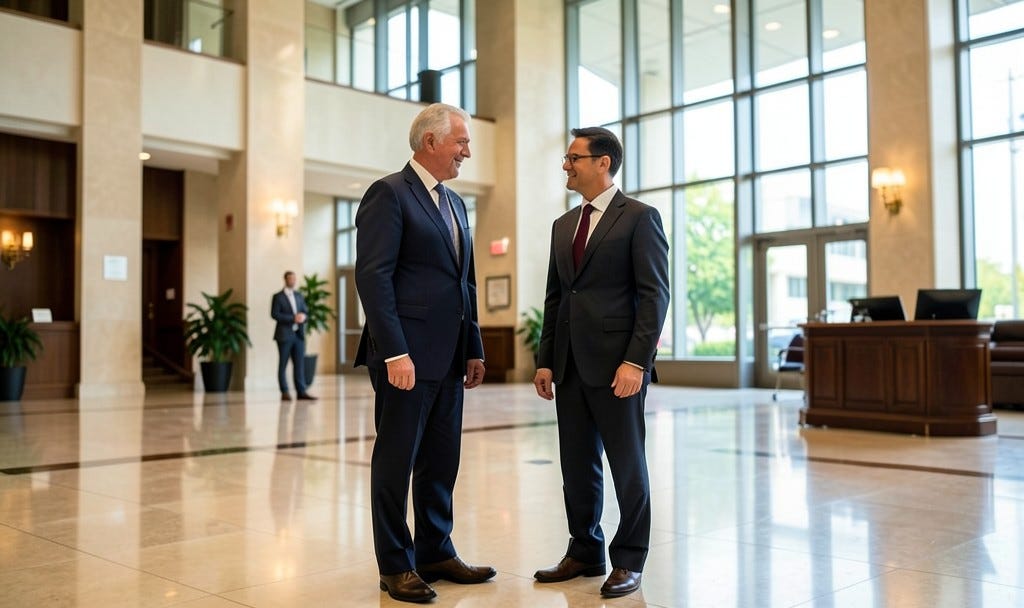
He’s not weighing your offer, he’s weighing you
Sit in his chair for a second. He’s got a few hundred families who call him when their kid gets into college and when their husband dies. He knows he can’t do this forever. And underneath the golf and the “I’ll figure it out next year” is a quiet fear that he winds down badly, the clients scatter, and the thing he built just evaporates. That’s the real itch. Not liquidity. Legacy.
So when you show up, he isn’t really evaluating your offer. He’s evaluating you. Would I trust this person with Mrs. Abernathy, who I’ve sat with through two recessions and a divorce? If the answer in his gut is no, it doesn’t much matter what you’d pay. And if it’s yes, the price mostly sorts itself out, because now he wants you to be the one.
I came to this slower than I’d like to admit. For years I thought these deals were won on terms. They’re won on trust. The terms get negotiated after the trust is already in the room.
So slow down
The instinct, once you’ve finally found a firm worth buying, is to move fast before someone else does. Fight it. The first meeting isn’t a negotiation, and it’s barely about the deal. You’re there to understand what he built and what he’s afraid of, and to let him work out whether you’re safe.
Ask him about the practice. Not the numbers, the practice. How he got started. Which clients he lies awake worrying about. What he wants his last chapter to actually look like. Most of these guys have never once been asked. They’ve got brokers circling who want the assets and couldn’t name a single household, and here you are, actually curious about the people. That alone sets you further apart than any term sheet could.
The stuff nobody teaches about this is exactly what The Chairman’s Council is for. Paid members get the full playbook, and every one after it.
One of these conversations handled right can hand you a whole practice. Upgrade and read how.
And be honest about what you don’t know yet. If you don’t have a plan for his clients, say that, and say you’d want to build one with him. A retiring Advisor can smell a pitch from across the room. What he can’t quite resist is someone who seems like they’ll genuinely take care of his people. Give him that, and you stop being a buyer he’s wary of. You become the relief he’s been quietly hoping would walk in.
